Good Meat BreakdownGood Meat® Snapshots
Chereen Leong Schwarz

Written by Good Meat Project
Revised
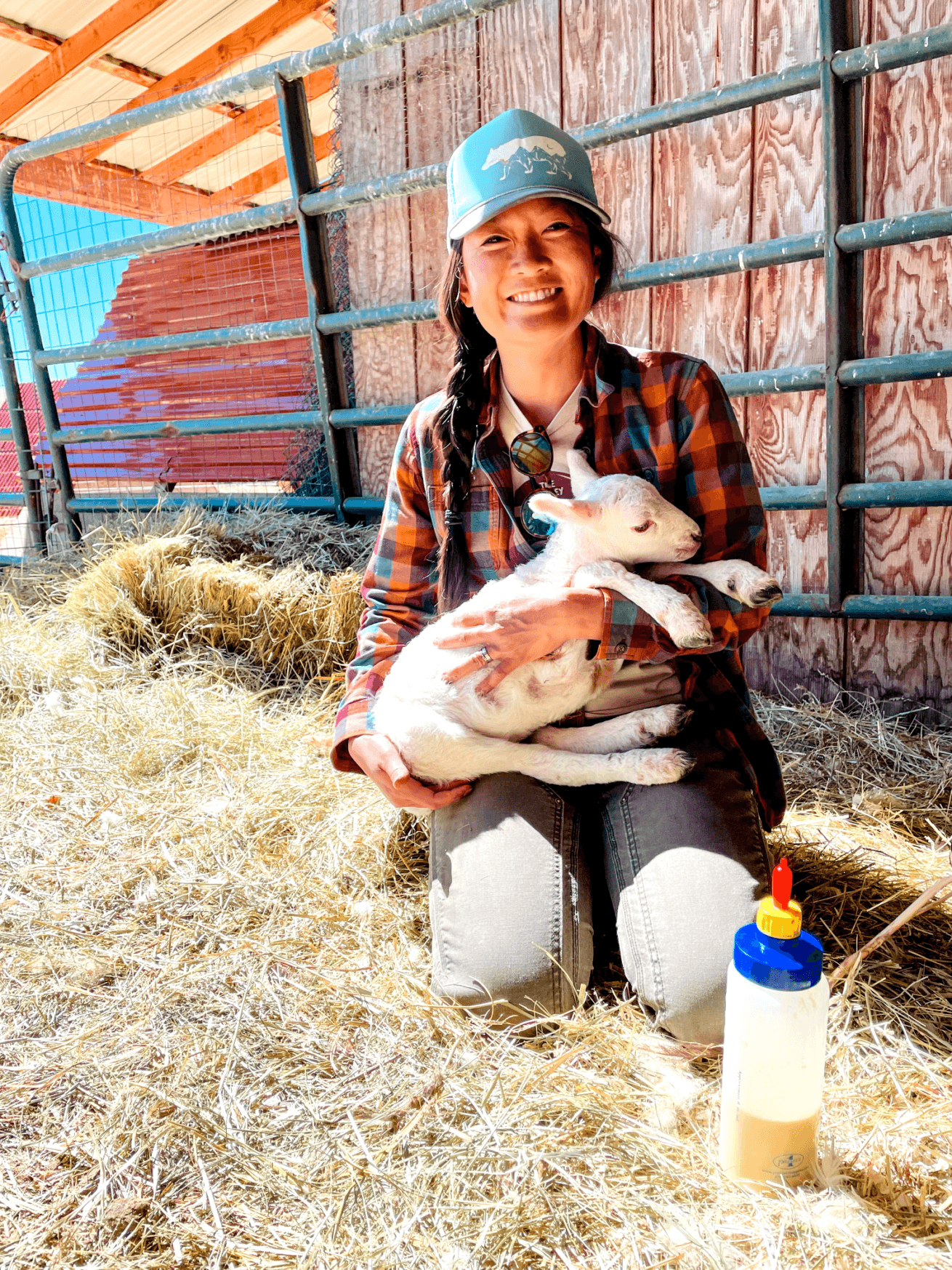
Chereen Leong Schwarz, a California native turned Colorado mountain girl and owner of Wilderbean Provisions, is passionate about small farms, local ingredients, and the amazing flavors of comfort food from around the world. She is inspired by travel and her Bay Area roots, as a a private chef in Steamboat is inspired by travel and her bay area roots and hopes to share her love of eating “real food” with others by showing that it doesn’t have to be complicated to be delicious.
After a decade of managing kitchens, opening new restaurant concepts, and showcasing her culinary skills at the James Beard House in New York, she discovered her true passion for local ingredients and uncomplicated, rustic dishes. In 2018, she made a bold decision to leave the restaurant industry behind and immerse herself in the world of farming. Getting her hands dirty and connecting with food in a whole new light, she found a renewed sense of purpose. Alongside her farm duties, she played a key role in creating an agritourism program that offered cooking classes and farm-to-table lunches. Now, after years of working on the farm, she runs her own seasonal private chef and catering business. While she continues to collaborate with local farms in the Yampa Valley, she also shares her passion for local, simple, and delicious food as a private chef in Steamboat.
Where do you live and work?
I live in Steamboat Springs, CO, located in the NW corner of the state. I work for myself running a farm-to-table private chef and catering business during the summer farming season in CO, and I also have a full-time knitting business that focuses on sustainable, hand-knit, wool beanies and adventure goods.
How do you define your Good Meat® values?
My values stem from supporting local, sustainable, small-scale farms with ethical practices that benefit the workers, animals, land, and consumers. It’s important for me to bridge the gap between my connections and work with local producers and the food that I serve to clients.
What has been your experience in the meat industry?
My career started with 10 years in the restaurant industry where I was fortunate enough to work for chefs and restaurants that strongly valued local food and supporting small farms. From there, I fell in love with whole-animal butchery and utilization. I ended up leaving the restaurant world to work on a small, local farm where I was tasked to create a culinary department with the goal of educating people through workshops, cooking classes, and farm-to-table meals. This became the catalyst in starting my own private chef business. Now, I help out on a friend’s ranch when I can, participating in various projects including fencing and slaughter for their direct-to-consumer livestock business. I am proud to use their meat for my catering business, sharing with my clients how direct the connection to their food is.
Why do you serve meat that aligns with those values in your business?
I think eating good meat is something we should all strive to prioritize. I know it is not always accessible or possible, so by serving good meat to clients and sharing the story and values behind it, I hope to inspire them to seek out good meat on their own. I do as much as I can to be involved in the processing of the meat I serve and if I’m not processing it myself, I source it from local farmers and ranchers, many of whom are also friends. I also bring my catering staff to processing events so they can have a connection of their own to the food we serve at events.
It feels so good to be part of the process of raising, slaughtering, and then eating good meat. I don’t think a lot of chefs get to experience that and equally, I don’t know if a lot of producers are able to see their end product being enjoyed by consumers either. It’s the most amazing thing when a customer says that “they’ve never had a pork chop like this.” And then ask “How did you make it?” I might have enhanced and cooked it well, but ultimately, it’s the quality of the meat that makes all the difference.
What is one thing you wish your customers knew about the food on their plates?
My goal with every client’s dining experience is that it is not only memorable and delicious, but also meaningful and educational. I speak in detail about what they are eating and the direct connections my staff and I have to that food. I only wish that I could hold someone’s attention to tell the story of their food better than the perfectly brined and smoked chicken in front of them on their plate.
What meat, or meat dish, do you eat most regularly and what do you eat for a special occasion?
There is no regular meal in my household. That is the draw of whole animal butchery, allowing me to be creative in my home kitchen and make every part of an animal as tasty as a prime cut. I love a good ugly delicious dish that someone’s grandma is cooking, from pork green chili to shoyu chicken to Indian lamb curry. I want something bold, tasty, and local. For special occasions, I’m a sucker for slow roasted prime rib roast with all the fixin’s!
What is one of the biggest challenges you face as a chef who centers your Good Meat® values?
Educating people on the cost is important, because good meat is often significantly more expensive. I want to support the producer and their work, but I am conscious of accessibility at that price point.
I try to convey that the goal is not perfection when it comes to eating good meat, but rather doing as much as you can when you can. I want people to understand the value behind the cost of good meat and be able to prioritize eating it. I also understand that there is a lot of financial stress and good meat might not always be as accessible.
Good Meat® Snapshots
Popular Links
Transparency in meat, from pasture to plate.
Practical tools and a national directory to help you choose—and champion—ethical and responsible meat.