
Related article
Meat, Lies, and Monopoly: How Four Companies Hijacked Dinner and How the Good Meat Project Is on a Mission to Get It Back!
Keep Meat RealKeep Meat Real
Let's build a Good Meat® movement today.
Donate today!When conversations about climate change, environmental degradation, and food systems come up, cattle often find themselves cast as the villain.
But what if we've been asking the wrong question?
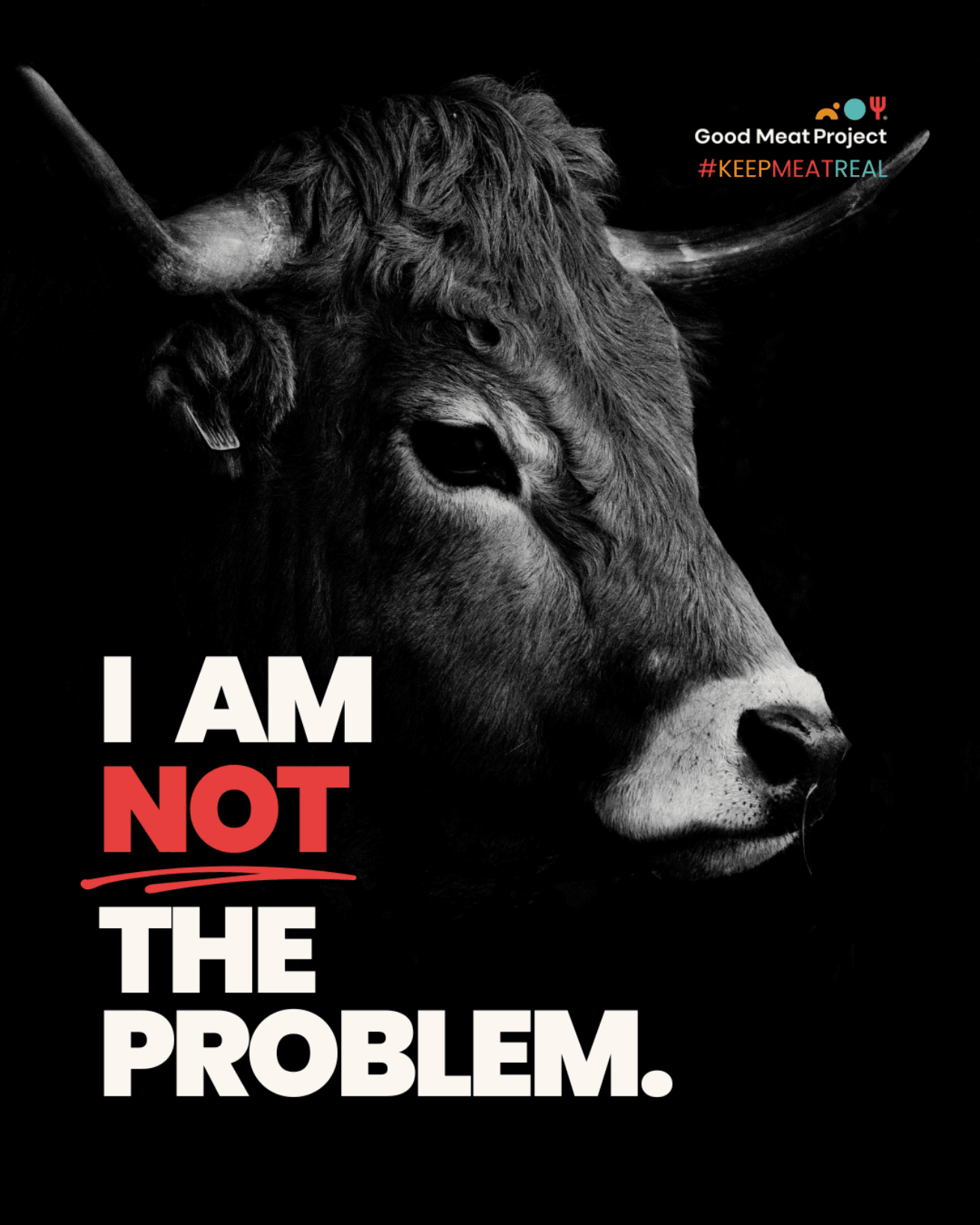
The issue isn't the cow. The issue is how we raise animals.
That's why we say: "It's not the cow, it's the HOW."
If we want meaningful solutions, we need to stop blaming animals and start examining the industrial systems that dominate modern food production.
The industrial agriculture model was designed to maximize efficiency and output. But in many cases, it does so by externalizing costs onto animals, workers, communities, and the environment.
Large-scale confined animal feeding operations (CAFOs) and industrial feedlots concentrate thousands—or even millions—of animals into overcrowded conditions. While these systems produce large quantities of food, they often create significant hidden costs.
The impacts ripple far beyond the farm gate:
Industrial feedlots generate enormous volumes of manure and waste. When poorly managed, these waste streams can contaminate waterways, contribute to harmful algal blooms, and degrade air quality for nearby communities.
As agriculture consolidates into fewer and larger operations, local businesses, independent farmers, and rural economies often struggle to compete. Wealth leaves communities rather than circulating locally.
Many workers throughout industrial food supply chains face dangerous working conditions, low wages, and limited protections.
Animals confined in crowded facilities are often unable to express natural behaviors that are fundamental to their well-being.
The more centralized our food system becomes, the more vulnerable it is to disruptions—from disease outbreaks and processing bottlenecks to extreme weather events and market volatility.
Consumers are often told industrial systems make food cheaper. Yet consolidation among a small number of dominant corporations can distort markets, squeeze farmers, and create instability throughout the supply chain.
Industrial agriculture frequently relies on practices that contribute to soil erosion, biodiversity loss, water depletion, and greenhouse gas emissions.
The result is a system that extracts value today while creating long-term costs for future generations.
Not all livestock systems are created equal.
The industrial model is built around extraction.
Regenerative agriculture is built around restoration.
When animals are thoughtfully integrated into healthy ecosystems, they can play a valuable role in rebuilding soil health, cycling nutrients, supporting biodiversity, and strengthening local food systems.
Well-managed grazing systems can:
In these systems, livestock are not separate from the environment—they are part of the solution.
Healthy grasslands evolved alongside grazing animals.
When livestock are managed intentionally, their grazing patterns can stimulate plant growth, recycle nutrients, and contribute to healthier ecosystems.
This doesn't mean every farm is regenerative, nor does it mean every grazing system automatically benefits the environment.
What matters is management.
The question consumers should be asking isn't: "Should we have cows?"
The better question is: "How were those animals raised?"
Every purchase is a signal.
When consumers support farmers, ranchers, processors, butchers, and food businesses that prioritize transparency, animal welfare, environmental stewardship, and community well-being, they help build markets for better systems.
That's why food labels, farmer relationships, and education matter.
It's also why Good Meat Project created the Keep Meat Real campaign—to help consumers navigate confusing claims and understand the difference between industrial production and values-based agriculture.
The future of food isn't about eliminating animals from agriculture.
It's about supporting systems that regenerate rather than extract.
Systems that give more than they take.
Systems that leave healthy farmland, thriving rural communities, abundant wildlife, and resilient food systems for future generations.
The next time someone tells you cows are the problem, remember: It's not the cow. It's the HOW.
Related article
Meat, Lies, and Monopoly: How Four Companies Hijacked Dinner and How the Good Meat Project Is on a Mission to Get It Back!
Join the movement to #KeepMeatReal
Practical tools and a national directory to help you choose—and champion—ethical and responsible meat.