Good Meat BreakdownGood Meat® Snapshots
Jade Hennessee-Golden

Written by Good Meat Project
Revised
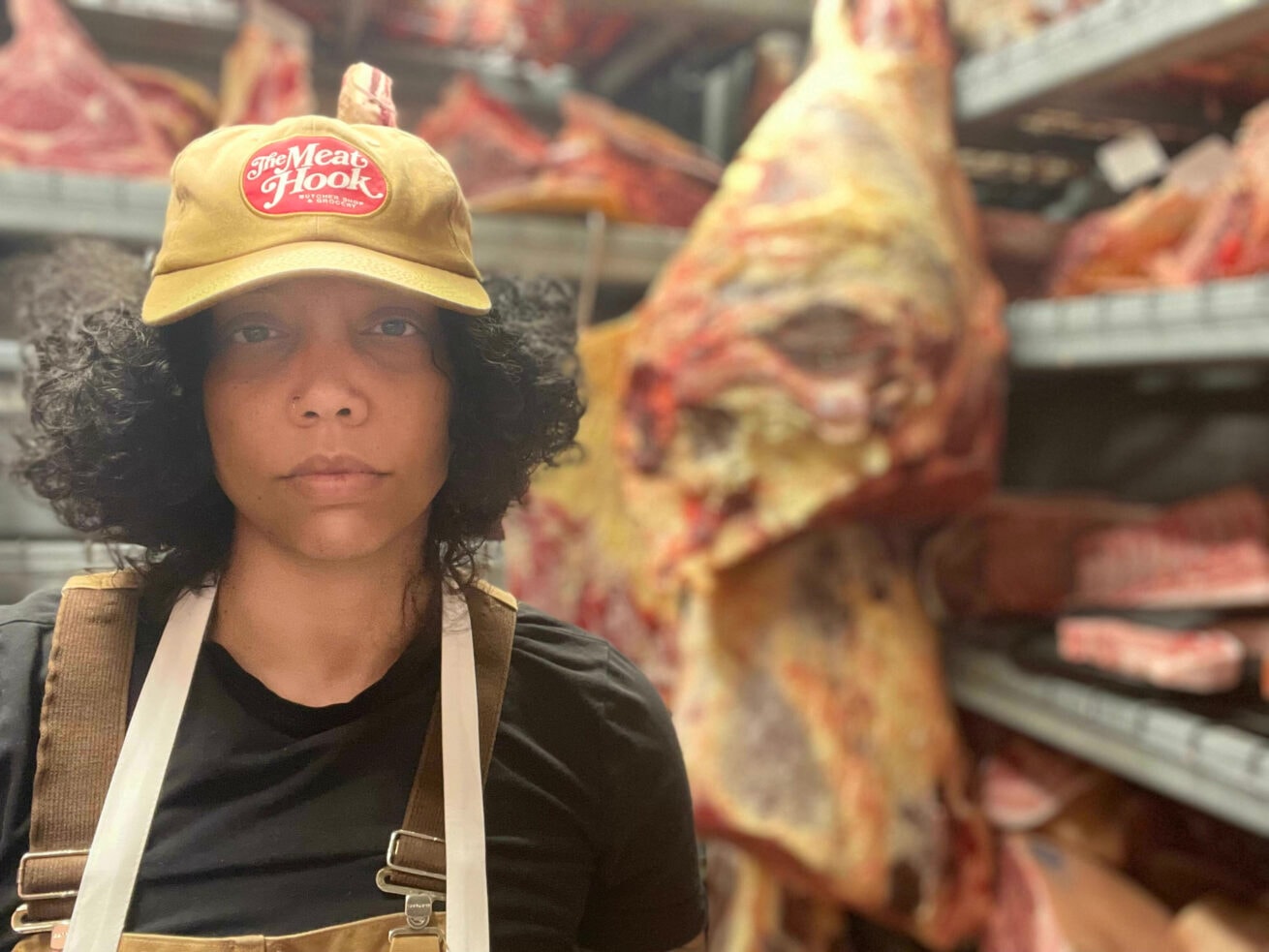
Jade Hennessee-Golden is a butcher and social media manager at The Meat Hook in Brooklyn, NY. For Jade, it’s always been about good meat, even when it wasn’t obvious. Jade was born and raised in Orlando, FL and moved to NYC in 2016. She has always been involved in the service industry and has worked in restaurants in many roles, including bartending, front of house, and on the line cooking. Her quest for good meat really became obvious for Jade, like many of us, during the pandemic. Temporarily out of work because of the restaurant shutdowns, Jade started doing community barbecues and feeding people who needed the support. When looking to acquire certain cuts that were great for barbecue, she started to notice how hard it was to find meat of a quality that she was willing to feed to other people.
“I was frustrated by shopping at larger stores because I didn’t understand why places couldn’t fabricate the cuts I wanted, like whole brisket or tri-tip. They would just look at me blankly. I realized that when meat is coming to your store in a box, you don’t have any control over the cuts and that when you aren’t doing whole animal butchery, you’re really missing out on the best stuff. I was able to find stuff to serve people from a small shop near me called Harlem Shambles. They had what I wanted because they were a whole animal butcher shop.”
This led Jade into the world of whole animal butchery, with a real focus on sustainably raised meats that aren’t just good for the planet, but good for the body, too.
How do you define your Good Meat® values?
Good meat is meat that I know where it came from. I know who raised it, what it ate, I know it didn’t go super far for slaughter, or to be finished. I want it to be super local.
How did you become a Good Meat® butcher?
It was honestly the quest for good meat. Food makes us feel human, safe. I’ve always been connected to the food I eat. During the pandemic it became clear that butchery was the way I was going to share that connection with other people.
Butchery is only possible through human hands. You can’t replace that. You have to have your hands in it. This is me contributing to that and being a part of it. The humanity has been taken out of so many industries. Automation does it [butchery] effectively, but only in one way. Practicing the physical act of butchery allows us to have options and enjoy meat in more than one way because we can have different cuts and different preparations. I want people to be able to find the meat they want.
I love what I do. I have so much fun at work. I can’t imagine doing anything else. This is the first job I ever truly wanted. It’s the only thing I’ve ever sought out and worked for. [As a butcher] I feel so connected to my community, my food, the planet, and my body.
Do you work at a butcher shop or meat counter currently and if so, where/what is it? What makes your shop unique/impactful?
I work at The Meat Hook. The thing that sets us apart from other places is that we do talk the talk and walk the walk. We practice whole animal butchery and it’s 100% grassfed, grass finished livestock from NY and PA. In practicing whole animal butchery, we’re using every part of the animal. Our value added program is insane. We’re making sausages, soups, stocks, SPAM, flavor bombs (which are rendered beef fat and marrow steeped in garlic and herbs for finishing steaks), cookie dough (with lard) all kinds of stuff. On the flip side of the counter, we’re committed to transparency not just in practice, but also in marketing. What the sign says is what the product is.
Why do you sell meat that aligns with your values?
At The Meat Hook we have a saying: “saving the world one burger at a time.” The world is on fire/falling apart and I can’t save the whole thing but I can have an impact here. It is change that I can do with my hands. It’s tangible. It’s actionable. It’s a way that I can contribute to creating a system that is better than the current ruling system [big agriculture]. By selling meat that aligns with my values, I can keep the emphasis on the human experience and not just see it as part of the big commodity chain. If it doesn’t look good, it doesn’t feel good, it doesn’t taste good, what’s the point?
What is one thing you wished more consumers knew about buying meat?
There’s more to the animal than NY strips, and ribeyes, and lamb lollipops. It’s not that they aren’t as good, it’s just that we need to cook it better. Braised meat is delicious. Smoked meat is delicious. When you know these different cooking techniques, it opens you up to being able to use the whole animal.
Also, buying buying meat that matches your values can be expensive, but that’s because it’s labor intensive and takes a lot of knowledge and skill. Whole animal butchery is intricate and if we don’t practice it, and don’t teach it, this whole thing [local, whole animal butchery] falls apart. The culture of care starts at the top and comes down.
What meat, or meat dish, do you eat most regularly and what do you eat for a special occasion?
Most regular: Braised spare ribs. Lately I’ve been on a coconut milk and lemongrass kick for the braise. I really like to do it with riblets—spare ribs that are cut down into smaller pieces.
Special Occasion: Classic steak. I like a NY strip and my wife likes tenderloin, super classic.
What is one of your biggest challenges as a Good Meat® butcher?
As a butcher, I’m grateful that our customers are amenable and open to input when they come into the shop. They have an idea of what they want, but take suggestions and buy a variety of cuts, not just the middle meats.
I want more people to accept the reality of where their meat comes from, and know that there isn’t anything inherently violent in what we (butchers) do. I’d like people to see good meat as a more approachable and accessible thing. I wish there wasn’t such an elitism associated that creates an inaccessibility. A lot of that is just a perception too. Good meat is too expensive, or we can’t get it, or whatever. You can and yes, sometimes it’s more expensive, but it’s because what we do takes more labor, more care for land, animals, and people in the supply chain. But it matters that buyers support that.
Good Meat® Snapshots
Popular Links
Transparency in meat, from pasture to plate.
Practical tools and a national directory to help you choose—and champion—ethical and responsible meat.