Good Meat BreakdownGood Meat® Snapshots
Melissa Cortina

Written by Good Meat Project
Revised
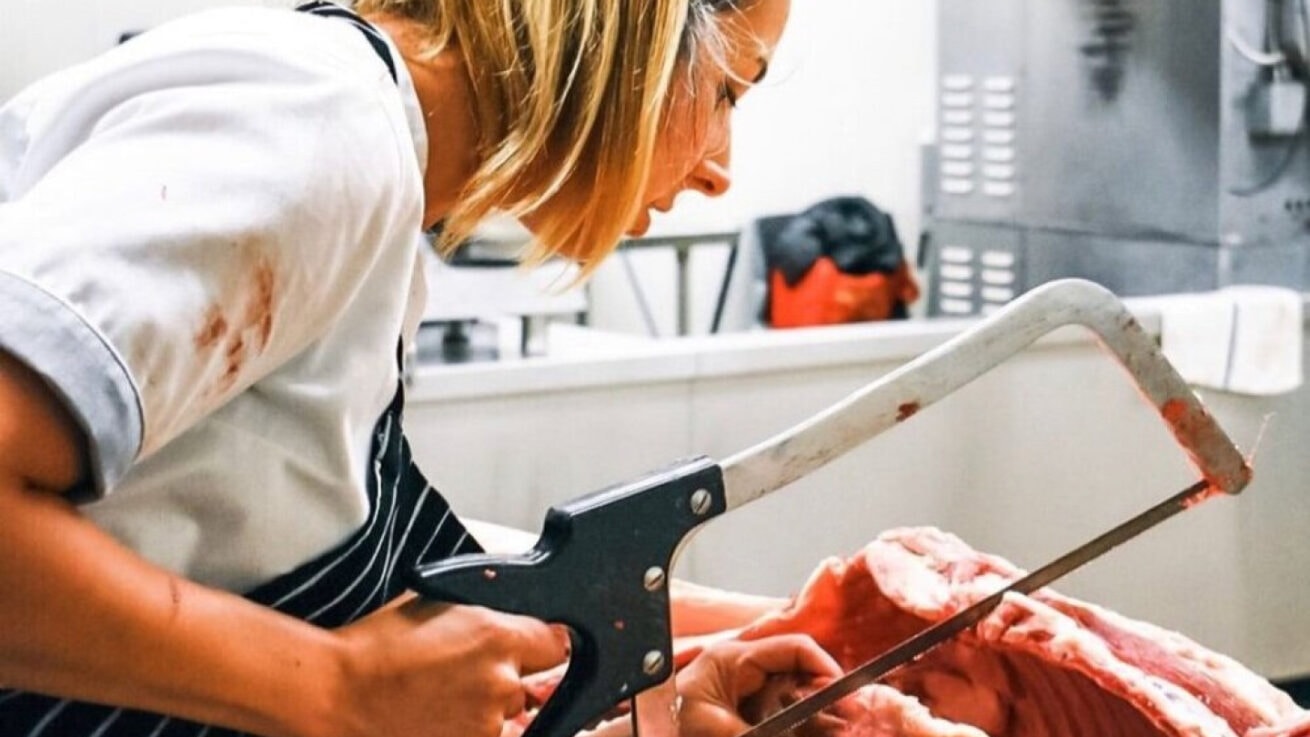
Melissa Cortina is the owner/butcher of Bavette Meat & Provisions, a whole-animal butchery business in Pasadena, CA, that sources exclusively from California farmers and ranchers.
Melissa opened Bavette in 2016, with only $23.00 in her business checking account, after becoming interested in butchery through her work as a line cook under chef Jody Adams, in Boston. To hone her skills, Melissa spent a year as an apprentice of Dario Cecchini at his famous Macelleria Cecchini butcher shop and restaurant in Panzano, Italy. Melissa developed a unique business model for Bavette: Rather than run a brick and mortar shop, Meilssa operated from a commercial kitchen, where customers could come to pick up their online orders or, once a week, they were welcome to drop by to shop what was left in the “case.” Melissa also sold meat at the Hollywood farmers market. “Owning my own butchery business was, hands down, the best and most difficult thing I’ve ever done,” Melissa said. As the owner and, basically, the sole operator, Melissa is in charge of Bavette’s digital marketing, website design, email campaigns, customer service, online store maintenance, butchery, preparation of value-added products, and working the farmers market. In 2021, with Bavette temporarily on hiatus, Melissa launched a new venture called Wild Geese that provides community and strategic support and training for small meat businesses facing unprecedented challenges posed by an industrialized supply chain that is not favorable to their success.
How do you define your Good Meat® values?
For me it's meat that comes from an animal that was given a good life, in which it was allowed to engage in its natural behaviors, treated humanely, and given plenty of fresh air, sunshine, food, and the kind of space best suited to its species. Italso comes from a quick and humane slaughter. Finally it is ideally also handled by a butcher with respect for where it came from, and what it will come to be in someone's home. One other essential component of truly Good Meat is the human labor involved in getting the meat from farm to table. Although the ideal Good Meat® supply chain doesn’t really exist right now, many people are working to make it a fairer, better paid, safer workplace. I hope that's part of the future for the Good Meat® universe.
How and from whom is meat sourced for your shop?
Bavette is small enough that I can manage to buy from single ranchers, for each species: Peads & Barnett's for pork, Pasturebird for chicken, Stemple Creek Ranch for beef, and Emigh for lamb. I have the help of another local butcher shop (Electric City Butcher in Santa Ana) in actually getting the beef and lamb to me. Because Bavette is so small, it was so expensive to get our beef rancher in Northern California to deliver whole carcasses down in Southern California. So, Electric City allowed me to pair my deliveries with theirs, and then delivered my product to my facility in Los Angeles.
What is one thing you wish more consumers knew about the food on their plate?
This is a hard question because, when it comes to my own customers, I would say nothing! I did a lot of work talking to them about why meat thats raised responsibly costs more, what it takes for me to run the business and actually pay help, etc. I think frequently we vastly underestimate the ability of our customers to understand complexities in our business, if only we take the time to explain it to them. In general, though, I would like consumers to experience a perspective shift: it isn't that Good Meat is outrageously expensive; it's that meat at your typical grocery store is outrageously cheap. The hidden cost is in humans, the earth, and animal welfare.
What meat, or meat dish, do you eat most regularly and what do you eat for a special occasion?
Controversial disclosure: I eat a majority plant-based diet. I feel better, and it allows me to make sure that I really respect and celebrate when I do eat meat. Last weekend, I ate braised chicken thighs with porcini mushrooms and potato dumplings, and it was phenomenal. For a special occasion, I'll also do the king of steaks: a ribeye or porterhouse, Dario Cecchini-style—grilled rare and sprinkled with salt and a drizzle of good extra virgin olive oil. The meat dish that I eat most regularly is not a meat dish at all. It's bone broth! I have that almost every day in some kind of soup with beans and greens.
What is one of your biggest challenges as a Good Meat® butcher?
Logistics. In Southern California, we have a perfect storm of factors that make it difficult to procure well-raised meat directly from the rancher. The weather and drought here make it a difficult place to raise beef, though some people do. But, in general, ranchers raising beef and lamb are up in Northern California, as are the USDA-inspected slaughterhouses that will process their animals. In addition, there aren't any USDA inspected slaughterhouses down here near Los Angeles/San Diego that will process under USDA for small ranchers, so ranchers who do raise animals down here have to transport them up north to get them processed, and then back down. So, it's just generally expensive and logistically challenging here if you are small.
Good Meat® Snapshots
Popular Links
Transparency in meat, from pasture to plate.
Practical tools and a national directory to help you choose—and champion—ethical and responsible meat.