Good Meat BreakdownGood Meat® Snapshots
Rosangela Teodoro

Written by Good Meat Project
Revised
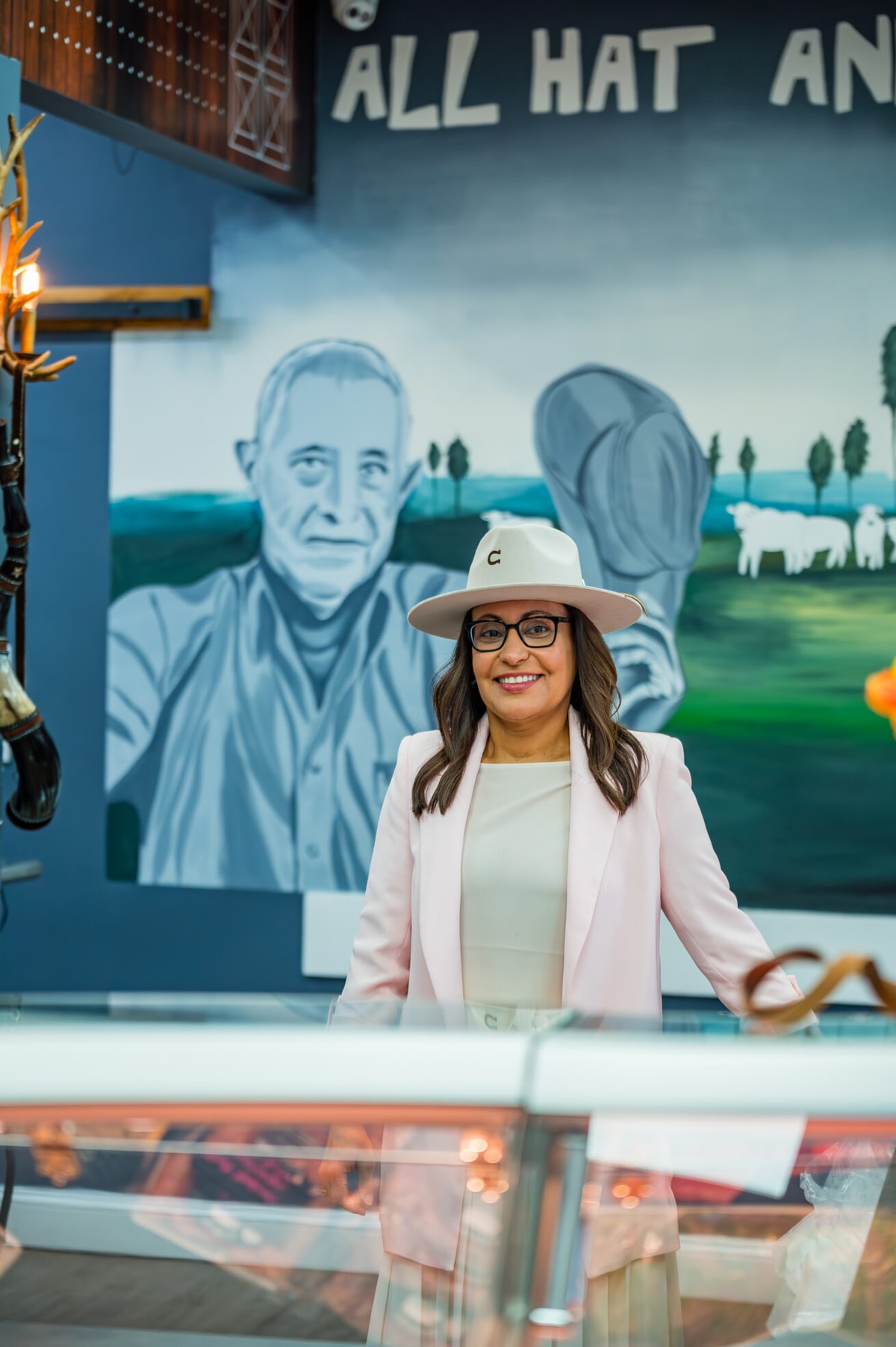
Rosangela Teodoro lives in Cohasset, Massachusetts, and runs Teodora’s Boucherie Gourmande, a butcher shop that prioritizes high-quality, ethically sourced meats. Since its opening in 2023, her shop reflects her family's legacy and aims to reconnect customers with the roots of their food.
Rosangela focuses on educating customers about the care that goes into meat production and showcases underappreciated cuts like the oyster blade steak. With country music often playing in the background and photos of her family’s ranch in Brazil along the walls, her shop is a tribute to her father’s legacy and a point of community connection.
Where do you live and where do you work?
I live with my young son in Cohasset, Massachusetts, a beautiful South Shore coastal town. I work here in the town at my butcher shop, Teodora’s Boucherie Gourmande. It’s an independent, family-focused business that prioritizes high-quality prime meats and thoughtful sourcing. For me, it’s not just about selling meat—it’s about honoring the farmers who care for the land and animals, and bringing that integrity to our community.
What made you want to open a butcher shop? When did you open it?
I opened Teodora’s Boucherie Gourmande in 2023 with a vision that goes beyond selling meat. My personal journey and family legacy are key inspirations—my father was both a butcher and a farmer. My shop addresses a gap in how people connect with food. Today, much of the meat industry is impersonal, with supermarkets dominating and leaving little room for the traditional butcher shop experience. I want to bring back the agricultural connection and offer a shop that is personal, ethical, and deeply rooted in the values of quality and care.
Educating customers about the journey behind the meat is just as important to me. Having grown up on a farm, it gives me a unique perspective and a deep respect for every activity. A great cut of meat comes from a long process of careful breeding, attentive farming, and respect for the land and animals. I’d like my customers to appreciate the efforts that go into producing meat for their table. I aim to reconnect people with this part of life that’s increasingly distant from the consumer.
I also wanted to bring back the village butcher shop that was once prided for its craftsmanship, sustainability, and where proprietors had close relationships with their customers. For me, my shop is a way to stand out. It’s not just another meat provider, but a steward of tradition and quality.
Above all, opening Teodora’s Boucherie Gourmande is a way to honor my past while building something meaningful for the future, for my son, and for this community. It’s a space where respect for the land, the animals, and the hard work behind every product is at the heart of everything we do.
How do you define your Good Meat® values?
For me, “Good Meat” is about respect—plain and simple. Respect for the animals, for the environment, and for the people who put in the work to raise food the right way. It’s about being mindful of where our food comes from and making sure the process is ethical and sustainable. That’s what my father always taught me: treat the land and the animals well, and they’ll give back to you.
Why do you sell and use meat that aligns with those values?
Because it’s the right thing to do. I know it’s not always the most profitable, but it’s worth it. For example, I sell KellyBronze turkeys because I know how they are raised—humanely, with proper feed, and in a way that brings out their best qualities. That kind of care and attention makes all the difference. Someday, I hope to have my own farm here in the U.S., raising beef with those same principles.
Where and when did your journey into butchering Good Meat® start?
My journey into butchering “Good Meat” has its roots in my father’s story. He started as a butcher in Goiás, Brazil, during the early days of the state’s development. It was a humble beginning. He first ran a single butcher shop, eventually expanding to four. My mother was deeply involved, often helping when my siblings and I were young. My cousin, now in her seventies, would take care of us while my mother managed the shop alongside my father.
My father’s connection to meat and farming ran deep. Coming from a family with a history of ranching, he was drawn to the idea of creating something big. He transitioned from butcher shops to becoming a partner in a slaughterhouse. Later, he focused on building his own farms. This journey allowed him to complete the entire chain—from raising animals with care on the farm to ensuring the quality of the final product in the butcher shop.
That legacy of integrity and dedication to every step of the process inspired me. My father believed in doing things the right way, without shortcuts, and always putting quality and respect for the land, animals, and people at the forefront. Today, I carry those same values at Teodora’s Boucherie Gourmande, honoring his vision and creating a space where every cut of meat tells a story of care, commitment, and tradition.
How does your work in the States connect back to your roots in Brazil?
My work is deeply connected to the values instilled in me since childhood. My family taught me that we all have a responsibility to care for something greater than ourselves. Growing up on a farm, I saw firsthand how every decision impacted not just the land and animals, but also the people around us. Those lessons have shaped how I run my business today.
Teodora’s Boucherie Gourmande is named after my father, Teodoro. Every time I see the sign, his hat hanging on the wall, or the paintings of our farm, I’m reminded of his dedication and sacrifices. My father never took shortcuts. Our farm came first. He taught me that integrity and hard work define your legacy.
I’ve promised my son that we will honor those same values in everything we do. Running this butcher shop allows me to share my father’s legacy with him and with this amazing South Shore community we now call home. I believe that when you do remarkable work, your story never truly ends. It continues through others who carry it forward.
What is one thing you wish more consumers knew about buying meat?
I wish people truly understood how much care goes into raising high-quality meat. It is an intricate and time-consuming process. A cow’s life isn’t just about its time on the market. It starts with pregnancy, months of nursing, and years of careful care and planning. The land, the grass, the nutrients—all of these factors contribute to the final product. If something goes wrong along the way, it can take years to identify and correct the issue.
When you buy from farmers who respect their animals and the environment, you’re not just getting better meat, you are supporting a sustainable and ethical food system. This way of life is under threat and not from supermarket chains but also from the rise of online shopping. Online shopping has made it convenient to click, buy, and receive products at your door, but at what cost? It undermines small businesses like butcher shops, replacing personal connections and accountability with impersonal transactions.
Many of us have experienced the frustration of buying something online, finding it didn’t meet our expectations, and being unable to return it. Often, these products are poorly made, destined to be discarded, and this wastefulness only adds to the problem. By prioritizing convenience, we’ve sacrificed quality and the kind of customer service where people take the time to understand and meet your needs.
The dominance of monopolies in the food system has shown us how detrimental this can be—not just for consumers, but for farmers, small businesses, and the planet. Choosing to buy from local butcher shops or small farms isn’t just about better food; it’s an investment in community values like respect, accountability, and pride in quality work. It’s a way to resist a system that prioritizes quantity over quality and to preserve something worth passing on to future generations.
What meat, or meat dish, do you eat most regularly, and what do you eat for a special occasion?
Day to day, I love filet mignon. It’s lean, tender, and quick to prepare, which is perfect for my busy schedule. For special occasions, I like to make something more elaborate, like Beef Wellington with homemade pâté or terrines. It’s a labor of love that uses every part of the animal, honoring its sacrifice. Preparing it feels like a celebration, and sharing it with others makes it even more special.
What cut of meat do you think is most undervalued or underutilized?
The oyster blade steak, without a doubt. It’s such a fantastic cut, so tender and full of flavor. Most people don’t even know it exists! It’s great for slow-cooking, but if you prepare it right, you can grill it too. I love showing my customers how to make the most of it.
What is one of your biggest challenges as a Good Meat butcher?
Education, for sure. It’s not always easy to help people understand why high-quality, ethically raised meat costs more. Once they taste and observe the difference such as sustainability, and respect for the animals—they get it. It’s a challenge, but it’s one I’m passionate about.
What are some songs you listen to while butchering?
Music is always playing in my shop! I love country music. It sets the perfect mood for the day. Songs like Tennessee Whiskey by Chris Stapleton and Take Me Home, Country Roads by John Denver are staples. I’m also a big fan of Keith Urban. Yes, Nicole Kidman—your husband’s music is a daily soundtrack at Teodora’s! Sometimes my customers even catch me singing along, which adds a fun, personal touch to their visit.
Good Meat® Snapshots
Popular Links
Transparency in meat, from pasture to plate.
Practical tools and a national directory to help you choose—and champion—ethical and responsible meat.