Good Meat BreakdownGood Meat® Snapshots
Roxanne Masters

Written by Good Meat Project
Revised
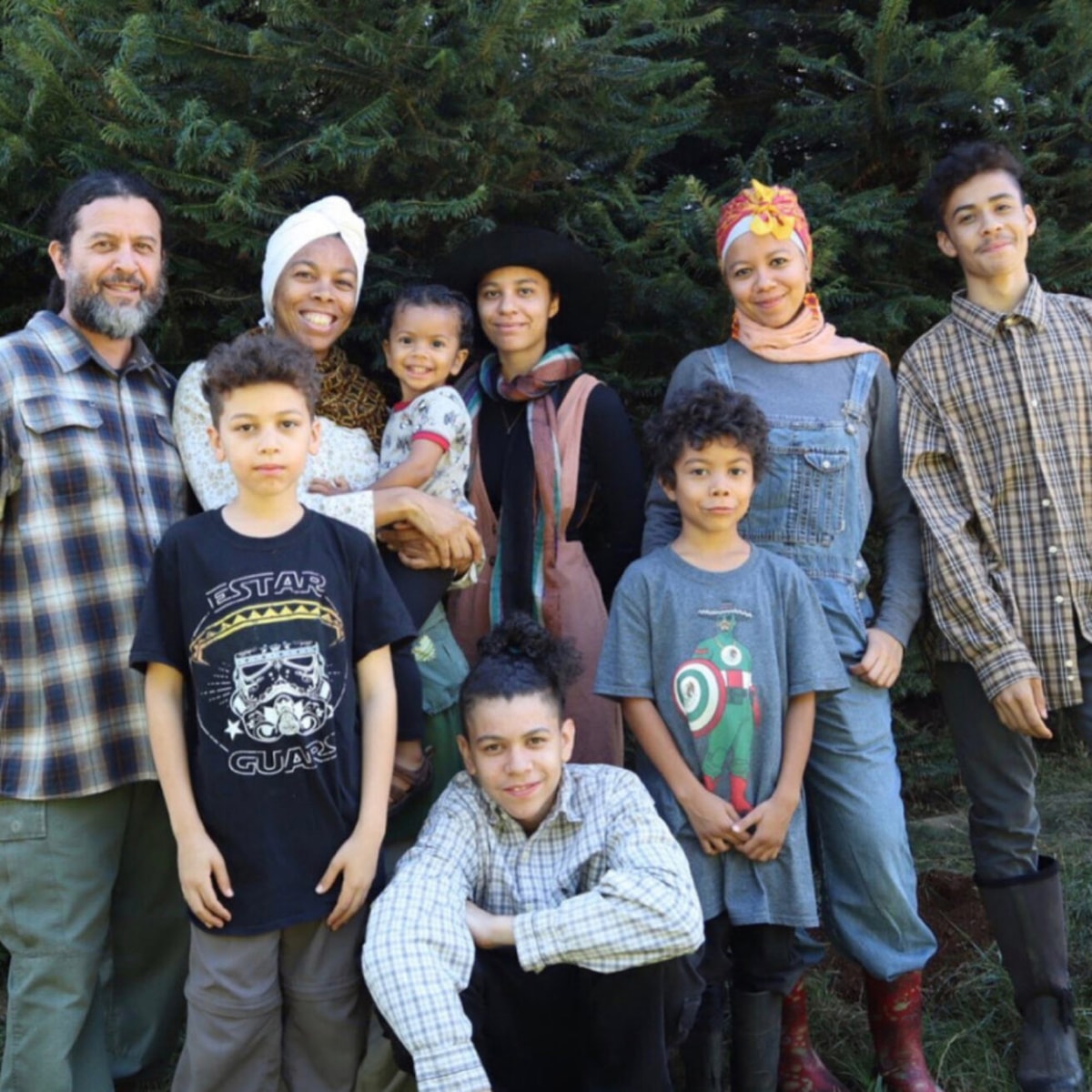
Roxanne Masters and her family run Roots n Earth Farm, in Cottage Grove, OR. They are striving to create a regenerative cycle on their land, using various principles including permaculture and native/folk knowledge regarding land stewardship and practices.
In addition to raising sheep, ducks, cows, rabbits, turkeys, chickens, trees, herbs, and vegetables, the family also does knitting, crocheting, leatherwork, and embroidery, which you can find on their Etsy shop. A recent recipient of a Real Farmer Care grant, Roxanne wrote this for @realfarmercare, “Roots n Earth is our small family farm. We’re a big Mexican-Jamaican family of nine living in Oregon. We practice sustainable, ancestral gardening and love doing things with our hands like crafting and woodworking. Our vision is to have a safe, sustainable community space on the land, and help our children, and others, gain practical skills. One of our ongoing goals [is] to decolonize sustainable agricultural practices and relearn some of our ancestral ways of farming. We come from farming families and cultures and always dreamed of having land to steward. We currently farm on 10 acres in a rural town in Oregon, where we are one of the few families of color. We grow food with a goal to feed ourselves year round, and we also have various livestock. We sell raw cow’s milk, raise St. Croix sheep (who were originally taken to the Caribbean from West Africa, on ships with our enslaved ancestors), and meat rabbits. Being Black and Indigenous/Latinx farmers gives us a different perspective when learning about sustainable farming, because much of it is colonized and stolen/capitalized knowledge. It is frustrating to be involved in the ‘regenerative agriculture’ movement and see firsthand how Indigenous methods are repackaged as cutting edge innovations, without respect, acknowledgement, or a real understanding of these traditions. It is frustrating to be seen as strangers in your ancestral practices and homelands. We need to be surrounded by more people of color who don’t second guess our experience. We’re trying to pay off our mortgage to be debt free so that we can have more time for farm and family. As BIPOC, we lack the generational wealth that lets some farmers jump right into full time farming. Our existence is resistance.”
How did you become a Good Meat® producer?
We are still on that journey, but we started by figuring out which animals would work best in our situation. Folks began asking if we had any extra that they could purchase. Our boys started raising pastured poultry and we sold some locally. We've moved away from selling pastured poultry, and have mostly been sharing knowledge about how to slaughter humanely with others. We've welcomed people to our farm and gone to other farms for unofficial lessons.
In addition, we want our children to have a healthy and respectful relationship with the food that they eat. While there was some locally, ethically raised meat available, we still could not find any that was halal or kosher. Both of those processes pay special attention to how animals are raised and harvested. We come from families where raising animals is the norm, and we decided that we needed to take more responsibility, if we were to continue eating meat.
What is one thing you wish more consumers knew about raising livestock?
It’s hard work. Keeping the animals healthy and happy is a daily endeavor that doesn't always go as planned. It's just us, as a family, so we have no one else to call on for help. There have been times where everyone was sick, so the least sick person takes care of the animals’ needs.
What meat, or meat dish, do you eat most regularly and what do you eat for a special occasion?
Most regularly, we eat roasted or stewed meat. For special occasions we eat barbacoa, which is meat cooked overnight in a sealed pit with hot stones. This is a traditional dish for us.
What is one of your biggest challenges as a Good Meat® producer?
Infrastructure and slaughtering of larger animals is one of the biggest challenges. Cows and sheep have been the most emotionally trying. We make sure the animal is calm and out of sight of any other animals, but we always have a bond, so it takes a lot out of us. We eat a lot less meat than the average meat eater. We really appreciate meat now and all that goes into it. Daniel, my husband, has helped other local farmers learn how to slaughter their animals respectfully and humanely, in hopes that more people will afford animals the respect and care that they deserve and require.
Good Meat® Snapshots
Popular Links
Transparency in meat, from pasture to plate.
Practical tools and a national directory to help you choose—and champion—ethical and responsible meat.